
Arugula: Grow It. Harvest It. Eat It.

MEET YOUR ARUGULA

Small Leaf. Big Flavor.
Arugula is one of the easiest ways to make an indoor harvest taste different from the greens most people buy every week.
Its tender leaves bring a naturally peppery flavor that can turn a simple salad, sandwich, pizza, pasta or egg dish into something more interesting.
And you don't need a backyard to grow it.
Arugula can be grown as an indoor baby green under supplemental light. University of Maryland Extension specifically includes arugula among greens suitable for indoor production and notes that baby greens can be grown year-round with supplemental lighting.
That makes arugula a natural fit for the Living Food™ idea:
Grow useful food where you live.
Harvest what you need.
Put it directly into tonight's meal.
Quick Facts
Crop: Arugula
Also Called: Rocket
Category: Leafy Green
Flavor: Peppery, slightly sharp
Difficulty: Beginner-friendly
Growing Location: Indoors
Growing Methods: Soil or soilless systems
Primary Use: Fresh or lightly cooked
Harvest Style: Individual leaves, baby greens or larger cut harvest
Best For: Salads, pizza, pasta, sandwiches, eggs, pesto and bowls
YOUR ARUGULA HARVEST GUIDE
When Is My Arugula Ready to Harvest?
You don't have to wait for your arugula to become a huge plant.
Arugula can be useful at several stages.
The key is deciding what you want to eat.
For small indoor gardens, selective harvesting is especially useful because it lets you take food from the garden without automatically ending the crop.
University of Maryland Extension recommends harvesting baby greens around 4–6 inches tall and reports that properly managed baby greens may regrow for additional harvests.

HOW TO HARVEST ARUGULA

HARVEST VIDEO
FROM GARDEN TO KITCHEN
You Harvested Your Arugula.
Now What?

ARUGULA PAIRING GUIDE

DMV KITCHEN INSPIRATION
Grow Here. Harvest Here. Cook With Local Inspiration.
🥗 ARUGULA + APPLE SALAD
Arugula Salad With Sautéed Apples and Nuts (The Washington Post / Ellie Krieger)
Peppery arugula is paired with warm apples, almonds, pistachios, rosemary and a simple dressing.
Pair with your harvest when:
You have a medium bowl of fresh arugula and want a fast lunch or side dish.
Indoor Garden Market pairing:
Arugula + fresh rosemary.

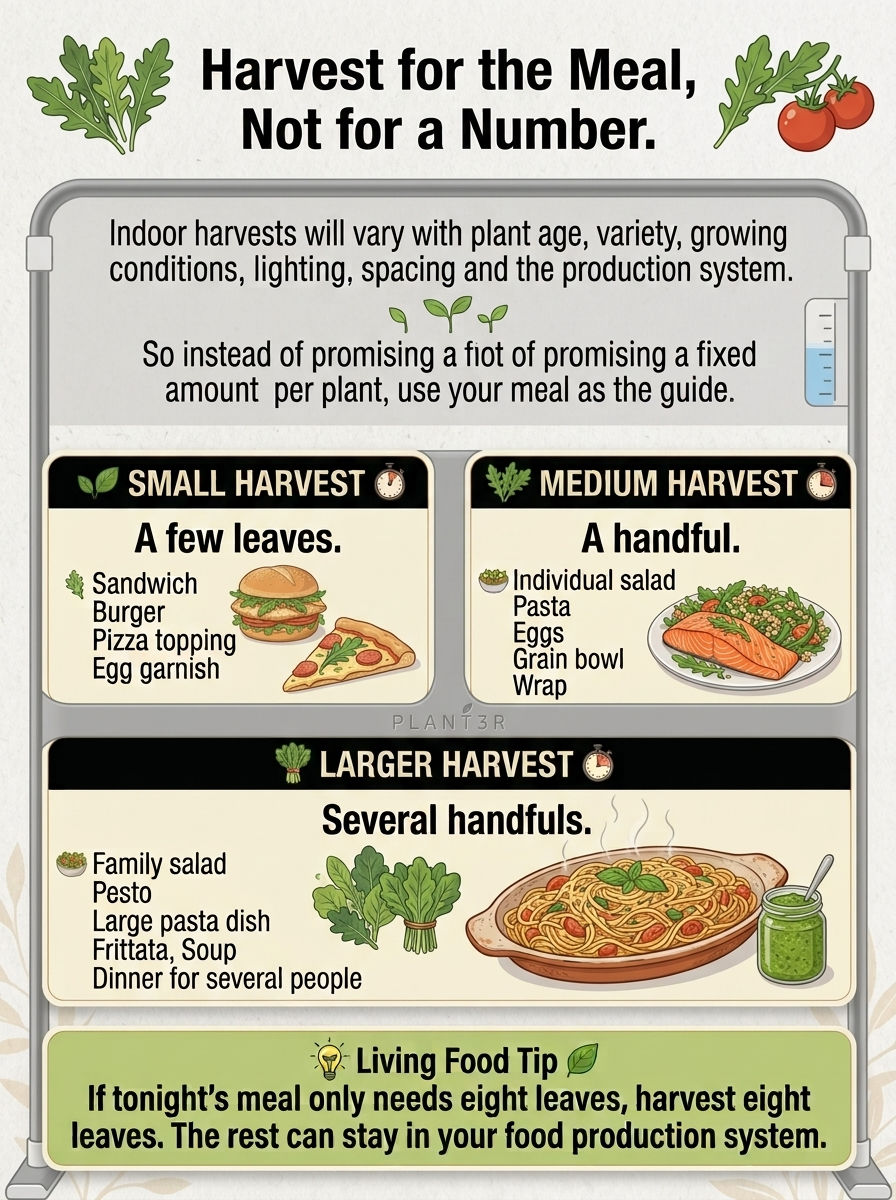
TONIGHT'S HARVEST

HOW MUCH SHOULD I HARVEST?
LIGHTING & GROWING
Give Arugula the Light It Needs.
Consistent lighting is one of the most important variables in indoor food production.
University of Maryland Extension notes that arugula and several other baby greens can grow acceptably under less-than-ideal light compared with more light-demanding crops. Its indoor-growing guidance recommends supplemental lighting and gives approximately 16 hours of total daily light as a useful target for indoor baby-green production.
Indoor Garden Market's existing LED Grow Light Buyer's Guide similarly recommends timed lighting and positioning lights roughly 6–12 inches above seedlings, then adjusting their height as plants develop.
Watch For
Stretching plants
-Your light may be too weak or too far away.
Crowded growth
-Give leaves enough space and airflow.
Sudden decline
-Check water, roots, light and plant age before assuming the crop is finished.
Strong flavor
-Remember that arugula naturally has a peppery bite.
NEED HELP WITH YOUR INDOOR GARDEN?
Explore Indoor Garden Market growing resources and FREE EVENTS.
You don't have to wait for your arugula to become a huge plant.
Arugula can be useful at several stages.
The key is deciding what you want to eat.
For small indoor gardens, selective harvesting is especially useful because it lets you take food from the garden without automatically ending the crop.
University of Maryland Extension recommends harvesting baby greens around 4–6 inches tall and reports that properly managed baby greens may regrow for additional harvests.
WHICH BUNDLES INCLUDE ARUGULA?
Find Arugula in Your Seasonal Harvest
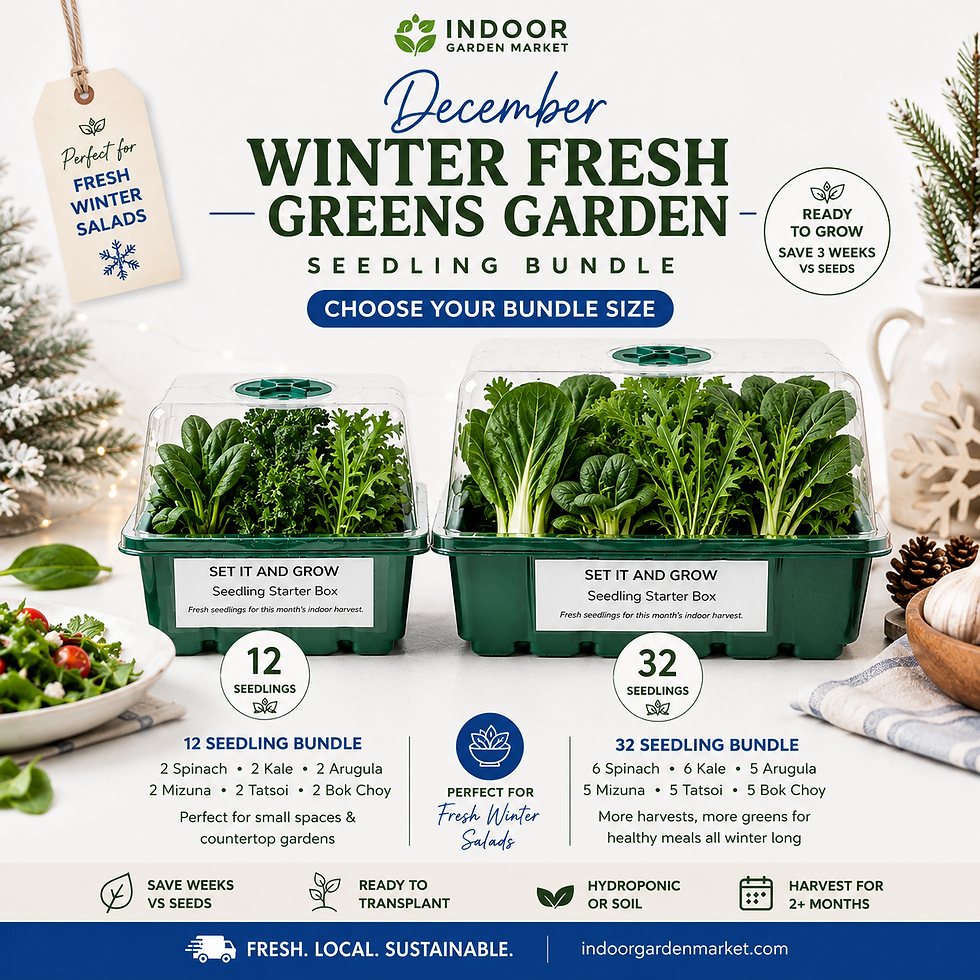
In the current 2026–2027 Living Food™ calendar, arugula is planned for three monthly leafy-green bundles.
AUGUST
Summer Salad Reset
-
Green leaf lettuce
-
Red leaf lettuce
-
Arugula
-
Baby kale
Story: Fresh salads without outdoor summer heat.
DECEMBER
Christmas Salad Bundle
-
Romaine
-
Red leaf lettuce
-
Arugula
-
Baby kale
Story: Grow toward a fresh holiday salad.
MARCH
Spring Green Kickoff
-
Green leaf lettuce
-
Arugula
-
Mizuna
-
Baby kale
Story: Start a fresh indoor crop cycle before outdoor growing season.
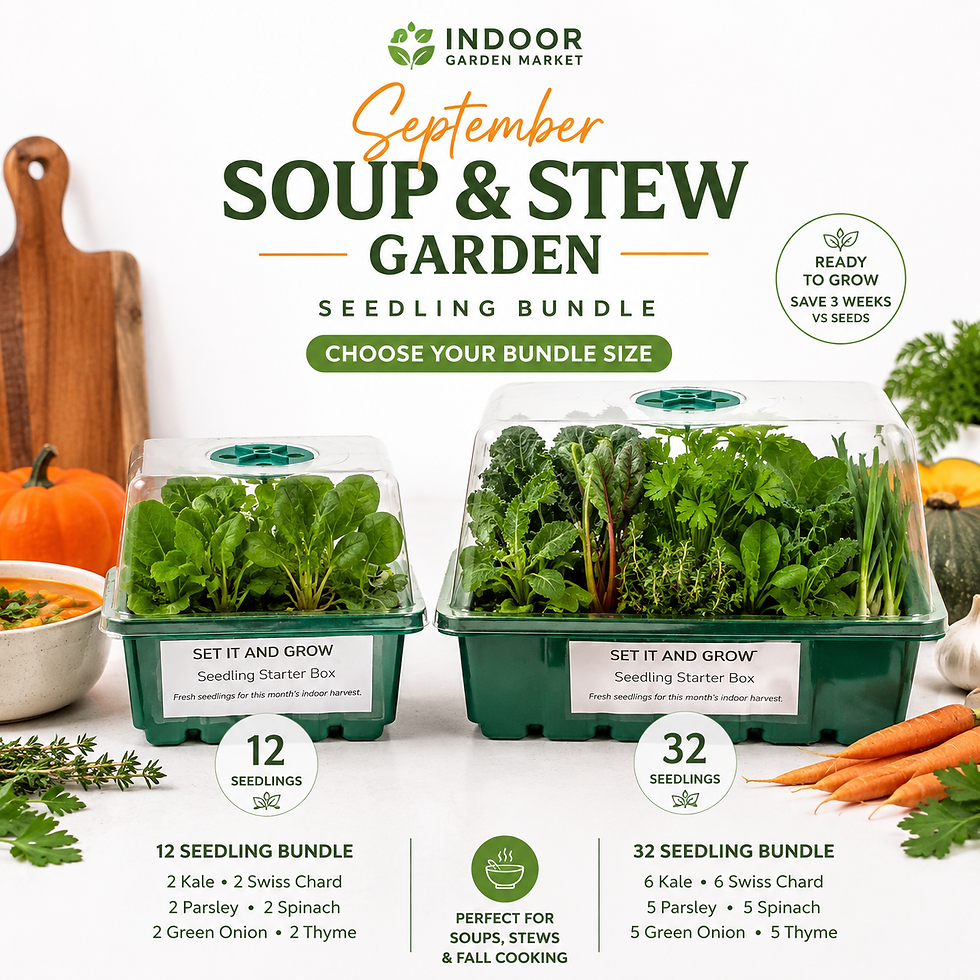
SHOP THIS MONTH'S SEEDLING BUNDLE




ARUGULA FAQ
Can arugula grow indoors?
Yes. Arugula can be grown indoors when it receives suitable light, moisture, airflow and growing conditions. University of Maryland Extension specifically includes arugula in its guidance for indoor baby greens.
Can I grow arugula without a backyard?
Yes.
The whole Living Food™ model is designed around growing useful fresh food in homes, apartments, condos and other small spaces.
What does arugula taste like?
Arugula is known for a distinctive peppery flavor. Younger leaves are often more tender, making them especially useful in salads and sandwiches.
Can I harvest arugula more than once?
Potentially, yes.
University of Maryland Extension reports that indoor baby greens cut at the appropriate stage may regrow for one or two additional harvests. Actual performance will depend on how the plants are grown and harvested.
Should I eat arugula raw or cooked?
Both.
Eat it fresh in salads, sandwiches and on pizza, or add it to eggs, pasta, soups and warm dishes.
What goes well with arugula?
Strong starting points include:
Parmesan
Goat cheese
Tomatoes
Eggs
Chicken
Fish
Apples
Pears
Figs
Lemon
Olive oil
Balsamic vinegar
Nuts
Is arugula only for salads?
No.
Use it on pizza, in pasta, eggs, sandwiches, pesto, bowls, soup and other meals.
When should I harvest arugula?
Harvest when the leaves are at a useful size for what you intend to eat. Baby greens are commonly harvested around 4–6 inches tall.
Where can I get more arugula seedlings?
Check the current Living Food™ seedling bundle at Indoor Garden Market or join the Arugula Harvest List for availability updates.